





 Thermal labels
A Complete Guide on Thermal Paper: How It Works, Types, Uses and Advantages
What is Thermal Paper?
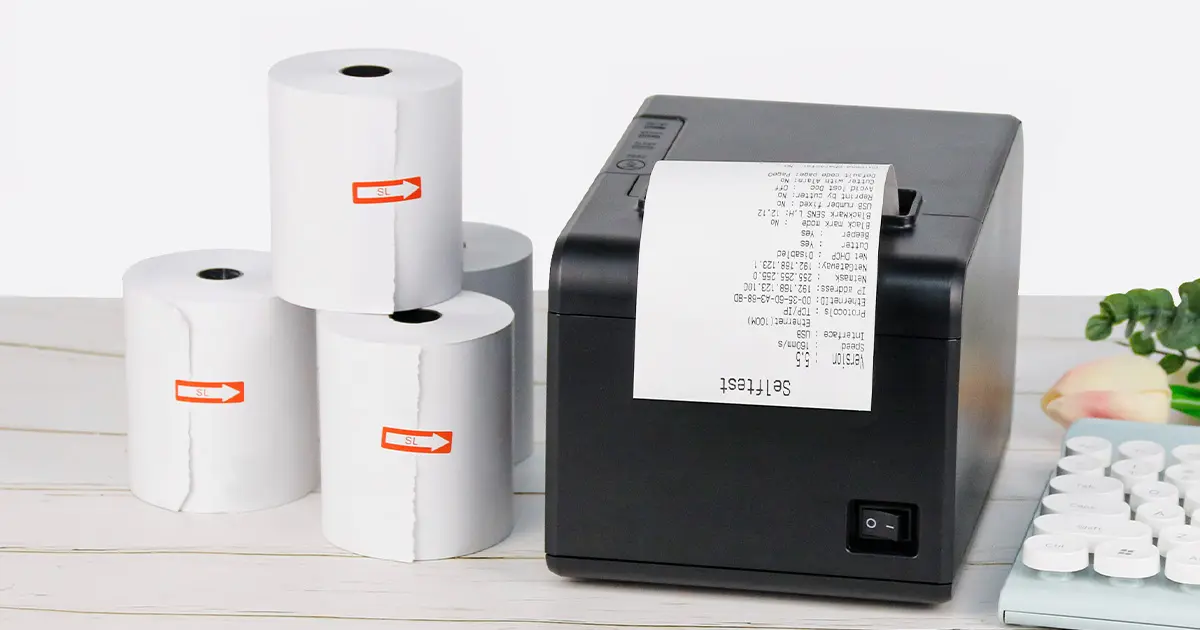
One sort of paper that is unique is thermal paper; it changes color when heated. Commonplace things like tickets, labels, receipts, and more are used with it.
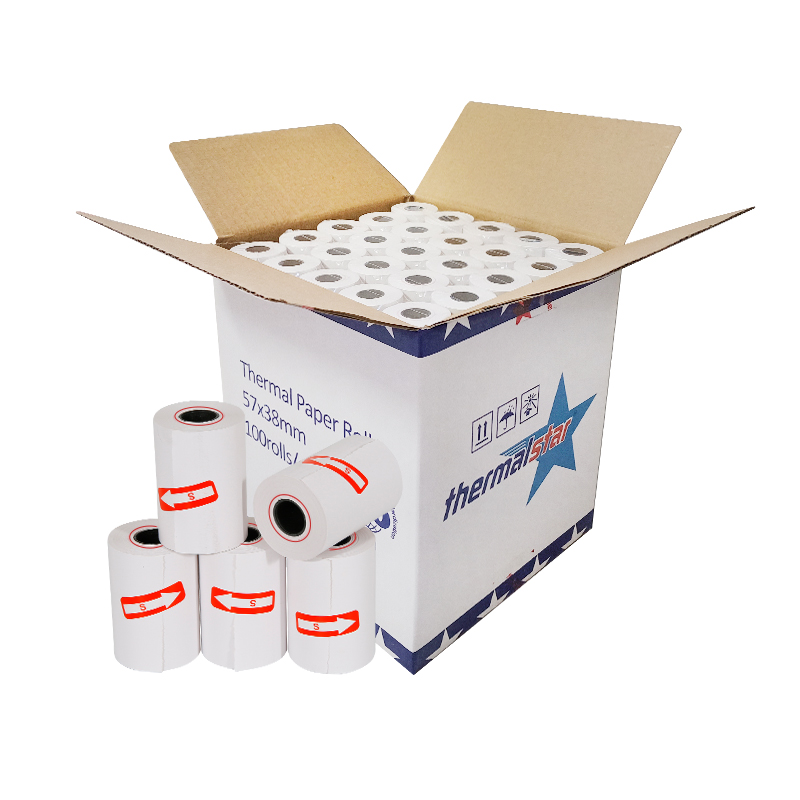
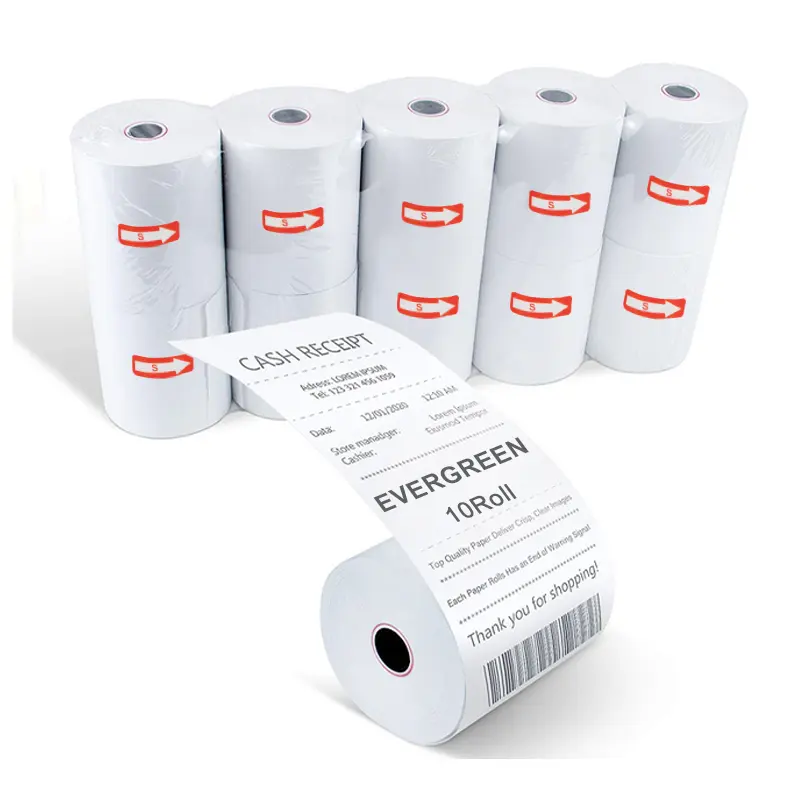
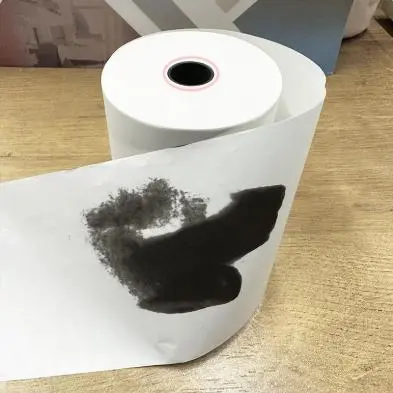
To understand the concept of thermal paper better - you should know what thermal printing means.
There are two common methods of receipt printing: normal printing and thermal printing.
Normal printing is just like how a regular printer works. It is an old technique using a printer, ink, and paper. However, this approach is expensive and time-consuming because you must change the ink cartilage occasionally and maintain the printer.
For example – Let's say you own a small grocery shop where you use regular printing for bills. There is a huge queue for billing, and the printer runs out of ink. Changing the cartilages takes time, so your customers will leave or get annoyed.
This is the main problem that thermal printing solves. Here, instead of ink, heat is used for printing. But for this, you need a special type of thermal paper. It is different from regular. Many chemicals are used to make it. This is what we will discuss in the next section.
What is Thermal Paper Made of?
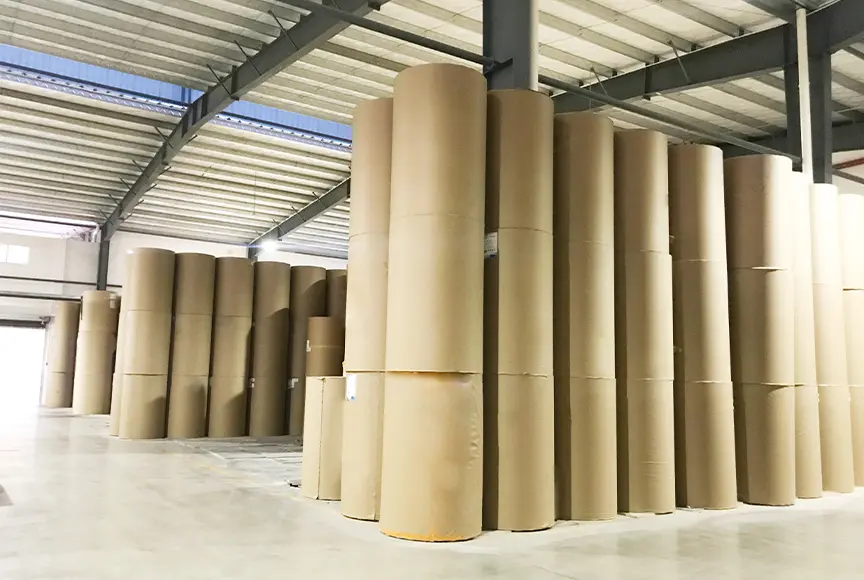
Base Paper
Pre-Coat
Then, you add a pre-coat layer to the base paper to help it retain heat better. This pre-coat also makes the paper smooth and durable, improving its quality.
Thermal Coat
Lastly, you have to add a thermal coat to the paper. This is the key step in the production process. It contains multiple chemical compounds that react to heat to produce images or text. The main components in this layer are as follows -
● Leuco Dyes: Leuco dyes are clear crystals that melt when hot.
● Developers: When they melt - they mix with the developer. It is an organic acid that’s present in the coating. It is what creates the opaque color. Common developers for thermal paper include bisphenol-A (BPA) and bisphenol-S (BPS).
● Sensitizers: Sensitizers' job is to regulate the temperature at which the thermal reaction occurs. They help maintain the specific temperature for the thermal reaction to occur.
And that's how thermal paper manufacturers make regular paper suitable for thermal printing.
How Does Thermal Paper Work?
Thermal Paper Direct Printing
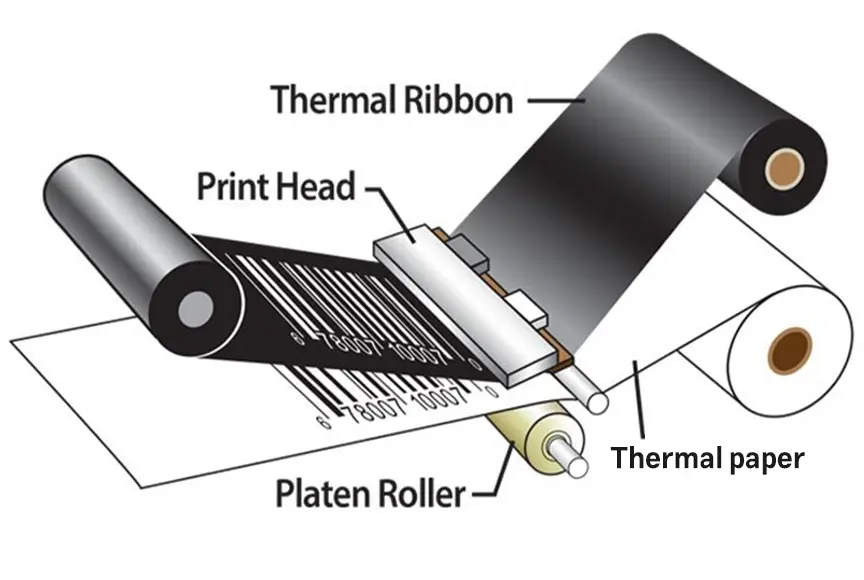
Thermal Transfer Printing
Types of Thermal Paper
Top Coated Thermal Paper
The names give it away. This type has an extra protective layer on the paper thermal coating. It helps protect the paper from - moisture, oil, and other environmental factors. This makes it suitable for receipts, labels, and tickets that need to last longer.
Non-Top Coated Thermal Paper
This type doesn't have the extra protective layer. While it's less durable than top-coated paper - it's still used for receipts and short-term labels. And guess what? It is cheaper and works well for everyday needs.
Long-Life Thermal Paper
This thermal paper is perfect for long-term storage or archiving because of its increased fading resistance. This makes it ideal for essential files, medical records, and legal documents.
Label Thermal Paper
Specifically designed for making labels, this thermal printing paper often comes with adhesive backing. Barcode labels, product labels, and shipping labels all utilize it.
The Difference between Thermal Paper and Normal Paper
Printing Method
● Thermal Paper: Uses a thermal printer that applies heat and pressure to create text. A chemical that changes its behavior when exposed to heat coats the paper.
● Normal Paper: Uses inkjet or laser printers to apply ink or toner to the paper's surface.
Durability
● Thermal Paper: Less durable - can be easily scratched or torn, and the printed content can rub off.
● Normal Paper: More durable and can withstand more wear and tear.
Sensitivity to Light and Heat
● Thermal Paper: Sensitive to light and heat due to its chemical coating. It can fade or darken over time if exposed to sunlight or heat.
● Normal Paper: Less sensitive to environmental factors, making it last longer.
Here's a table for a better understanding of the differences.
Thermal Paper |
Normal Paper |
Coated |
Uncoated |
Uses heat |
Uses ink or toner |
Requires a thermal printer |
Can work with various printers |
Perfect for receipt labels and tickets |
Perfect for books and general printing |
Image can fade over time |
Long-lasting print |
Print can rub off |
More resistant to scratches |
More expensive |
Cheaper |
Faster print speed |
Slower print speed |
Store away from heat and light |
Normal storage |
Uses of Thermal Paper
Advantages of Using Thermal Paper
Low Price
Regular paper still requires ink to function, even if it is less expensive than thermal paper. Furthermore, the ink is pricey. On the other hand, thermal printing uses heat and doesn't need ink. Over time, this approach saves money.
Superior Quality
Print quality is crucial when it comes to tickets, labels, and receipts. Printers using ink may smear and smudge. Corrections to this will take time. Smudge-free, high-quality printouts are possible using thermal paper. If you compare the print quality of a bill with a printed notepad, you can tell the difference.
Quicker Producing
For businesses, especially those in the retail and hospitality sectors, speed is of the essence. You risk losing business if your printing is slow. The thermal printing process is millisecond faster. This fast printing speed is advantageous to many types of businesses.
Sturdiness
Many moving elements in traditional ink printers may break down fast, particularly with frequent usage. They also need regular upkeep. Conversely, thermal printers are more durable and have fewer moving parts. They can manage demanding tasks without experiencing regular issues.
How Do I Pick the Best Rolls of Thermal Paper?
Dimensions of Thermal Roll Paper
There are several sizes available for thermal paper rolls. Selecting the right printer size is crucial. To get the proper paper width, for instance, measure the width of your printer.
Quantity Purchased
Consider your transaction volume while purchasing thermal paper. Buying in bulk might result in cost savings and savings. But think about the storage environment.
Expert Advice:
Keep the paper somewhere cool and dry, no more than 77°F (25ºC).
Harmony
Make sure the thermal paper is compatible with your printer or other device. The incorrect kind may result in print quality issues or jams.
Paper Calibre
Verify the quality of the paper. The better paper is thicker and produces crisp, clean prints. Steer clear of cheap paper that might produce blotchy prints.
Impact on the Environment
Coverage
If you want prints that are resistant to fading, dampness, and smearing, go for thermal receipt paper with a top coating. This is particularly helpful for longer-lasting receipts.
Cost
Examine costs and take your budget into account. If higher-quality thermal paper is more expensive, it could be worth it to prevent getting subpar prints. Purchasing in bulk and choosing longer rolls are two other ways to save expenses.
Potential Developments in Thermal Paper Technology
Wrapping Up
FAQs
Can you use thermal paper in a normal printer?
No, you cannot. Because it works only on thermal printers that use heat to produce prints.
What are the characteristics of good thermal paper?
Good thermal paper is - durable, produces clear prints without smudges, and is compatible with thermal printers.
Is thermal paper recyclable?
Yes, you can recycle it. However, it requires careful handling because of the chemicals present in it.
Can I buy 3 1/8" x 230' thermal paper wholesale?
Yes, many thermal paper suppliers offer 3 1/8" x 230' thermal paper at wholesale price.
How do I order custom receipt paper?
Contact thermal paper suppliers that offer customization services to order custom receipt paper. You can also get in touch directly with a thermal paper roll manufacturer.